A $25 blackjack table and a $25 roulette table look like the same night out. They are not. At the play speeds one major Strip casino uses to rate players, a $25 double-zero roulette table costs about six times as much per hour as $25 blackjack with good rules, and a small line of print on the blackjack felt, "Blackjack pays 6 to 5," roughly quadruples what that game costs you.
This guide puts numbers on those differences. It uses the Nevada Gaming Control Board's August 2026 revenue report, which covers the twelve months from September 1, 2025 to August 31, 2026, plus published house-edge math and the most recent public table-minimum surveys. Where a figure is our own calculation, we show the formula. All Nevada Gaming Control Board figures here are for the twelve months to August 31, 2026; we will update them when the Board releases its September 2026 report.
Two ground rules. First, every casino game on this page favors the house, so the goal is to understand the price of the entertainment, not to beat it. Second, you must be 21 or older to gamble in Nevada.
House edge and casino win are two different numbers
You will see two kinds of percentages quoted about casino games, and mixing them up is the most common mistake in gambling math.
House edge is theoretical. It is the average share of each bet the casino expects to keep over the long run, assuming correct play. A 1.41% edge on the craps pass line means a $25 pass-line bet loses about 35 cents on average. The figures in this guide come from the Wizard of Odds house-edge table, the standard public reference, which counts ties and assumes optimal or near-optimal strategy.
Win percent is what the casino actually reported. The Nevada Gaming Control Board publishes it every month, by game and by area. For slot machines the Board defines it as the reported win divided by the total dollar amount played, so slot win percent behaves like a real-world hold on every wager.
For table games the Board's win percent is a different ratio, which the Board says has been adjusted for the effects of credit play. In standard casino accounting, table hold is measured against the drop: the cash and markers players exchange for chips. A 2014 UNLV hospitality master's thesis, citing casino-management texts, defines table hold as win divided by drop. Because the same chips are bet over and over, total wagers are many times the drop, so table hold is far higher than the house edge. As gaming writer Alan Krigman puts it, table hold "is influenced by edge but is not analogous to it" because it also depends on how long players keep betting from their buy-ins.
That is how a game with an edge under 1% can show a double-digit win percent. Over the last twelve months the Strip won $943.9 million at blackjack at an 11.91% win percent. The house did not take 11.91% of every bet. It kept 11.91% of the chips players bought, after those chips had circulated through many hands.
The practical lesson: use house edge to compare bets, and use win percent to see how much of what visitors bring to the tables the casinos end up keeping.
House edge on common casino bets
| Game | Bet or rules | House edge |
|---|---|---|
| Blackjack | Liberal Vegas rules (dealer stands on soft 17, double after split, re-split aces, late surrender), 3:2 | 0.28% |
| Blackjack | Common Strip shoe rules (dealer hits soft 17, double after split, surrender, re-split aces), 3:2 | 0.46% |
| Blackjack | Same rules, blackjack pays 6:5 | 1.82% |
| Video poker | Jacks or Better, full pay | 0.46% |
| Baccarat | Banker (5% commission) | 1.06% |
| Baccarat | Player | 1.24% |
| Baccarat | Tie | 14.36% |
| Craps | Pass line / come | 1.41% |
| Craps | Don't pass / don't come | 1.36% |
| Craps | Odds behind the line | 0.00% |
| Craps | Place 6 or 8 | 1.52% |
| Craps | Field: 2 and 12 pay 2:1 / 2 pays 2:1 and 12 pays 3:1 | 5.56% / 2.78% |
| Craps | Hard 6 or 8 | 9.09% |
| Craps | Any seven | 16.67% |
| Roulette | Single zero | 2.70% |
| Roulette | Double zero | 5.26% |
| Pai Gow Poker | Player sets hands the house way, plays one-on-one against the dealer and banks half the time | 1.46% |
| Ultimate Texas Hold 'Em | Ante | 2.19% |
| Three Card Poker | Ante & play / Pairplus | 3.37% / 7.28% |
| Let It Ride | Base game | 3.51% |
| Big Six wheel | $1 spot / joker or logo | 11.11% / 24.07% |
| Keno | Typical | 25%–29% |
Source: Wizard of Odds and, for the 0.46% and 1.82% blackjack rows, the Wizard of Odds 6:5 blackjack analysis, both checked October 20, 2026. Edges assume optimal play; real players make mistakes, so their effective edge is higher.
Three patterns stand out. The cheapest bets in the building are the "boring" ones: blackjack with good rules, the craps pass line with odds, and baccarat banker. Side bets and proposition bets, such as the tie in baccarat, hardways and any seven in craps, and the Big Six wheel, cost roughly 6 to more than 50 times as much per dollar bet as a good blackjack game or the pass line. And the same game can be cheap or expensive depending on one rule.
What Strip and Downtown casinos kept, by game
Win percent over the twelve months to August 31, 2026. Table win percent is a hold figure (in standard casino accounting, win divided by the drop, the cash and credit exchanged for chips); slots are measured against every dollar played.
Show the numbers
| Game | Las Vegas Strip | Downtown Las Vegas |
|---|---|---|
| Blackjack | 11.9% | 14.0% |
| Craps | 16.9% | 13.3% |
| Roulette | 17.9% | 18.3% |
| Ult. Texas Hold'em | 22.5% | 18.6% |
| 3-Card Poker | 31.1% | 28.9% |
| Let It Ride | 28.8% | 24.3% |
| Pai Gow Poker | 21.4% | 15.9% |
| All slots | 7.8% | 8.4% |
What the Nevada data actually shows
Read the chart as a measure of how much of the money players bring to each game ends up with the casino, not as the price of a single bet.
On the Strip, the table games with the highest win percent are the carnival-style poker games: Three Card Poker at 31.11%, Let It Ride at 28.80% and Ultimate Texas Hold'em at 22.48%. Their base-game edges are modest, between 2.19% and 3.51%, but each is played with extra wagers and optional side bets with higher edges, which likely helps explain the gap. Blackjack, the game with the lowest edge, has the lowest table win percent at 11.91%.
Downtown blackjack shows a higher win percent than the Strip, 13.97% versus 11.91%, even though Downtown is known for lower minimums. One plausible reason is that lower-limit tables are more likely to use 6:5 payouts and carry side bets, while big Strip blackjack players often play high-limit games with better rules. The Board's data does not break results down by rule set, so treat that as a hypothesis, not a finding.
Scale matters too. The Strip reported $943.9 million of blackjack win and 1,012 average blackjack tables over the year; Downtown reported $59.6 million from 190 tables. Strip baccarat alone won $1.53 billion at a 15.80% win percent, more than any other table game.
Slots are different. Their win percent is measured against every dollar played, so the Strip's 7.75% means slot players lost about 7.75 cents of every dollar they put through the machines, more than many table bets. Penny machines held 10.53% on the Strip and $1 machines 7.17%. Downtown slots held 8.36% overall.
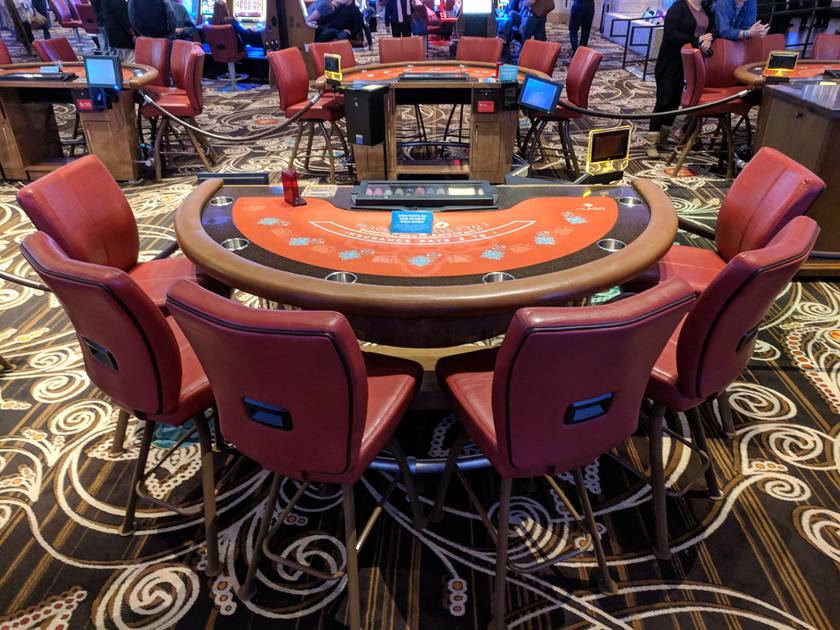
Table minimums on the Strip and Downtown in 2026
Nevada does not publish table minimums; casinos set and change them by the hour. The most detailed public tracker is Vegas Advantage, which surveys casinos in person and summarizes the results for free, with property-by-property detail for subscribers. Its 2026 Strip survey says the minimum for a 3:2 blackjack game on the Strip "is usually $25 or $50, even during slower hours," can be found as low as $15, and "may be $100 when it is busy."
The cheapest live games are almost always the worst. Vegas Advantage reported in January 2026 that Slots A Fun and Excalibur deal $5 blackjack that pays 6:5. The same report said The STRAT had become the only Strip casino paying 3:2 on all blackjacks, and that its surveyors had twice seen single-zero roulette there at a $15 minimum, which the site called the cheapest single-zero roulette in the Las Vegas market. In its May 2026 Strip survey, Vegas Advantage found The STRAT dealing three blackjack games, all paying 3:2, with minimums from $5 to $25.
Caesars Entertainment properties, the same report said, now deal $25 3:2 six- or eight-deck blackjack on most casino floors, usually $50 at Caesars Palace, while their 6:5 games are usually $15. For the best rules, look in high-limit rooms: Vegas Advantage found stand-on-all-17 six-deck games at 16 Strip casinos with $50 to $500 minimums. With surrender and re-split aces the house edge is around 0.28%; Vegas Advantage puts the Caesars-property versions at about 0.35%.
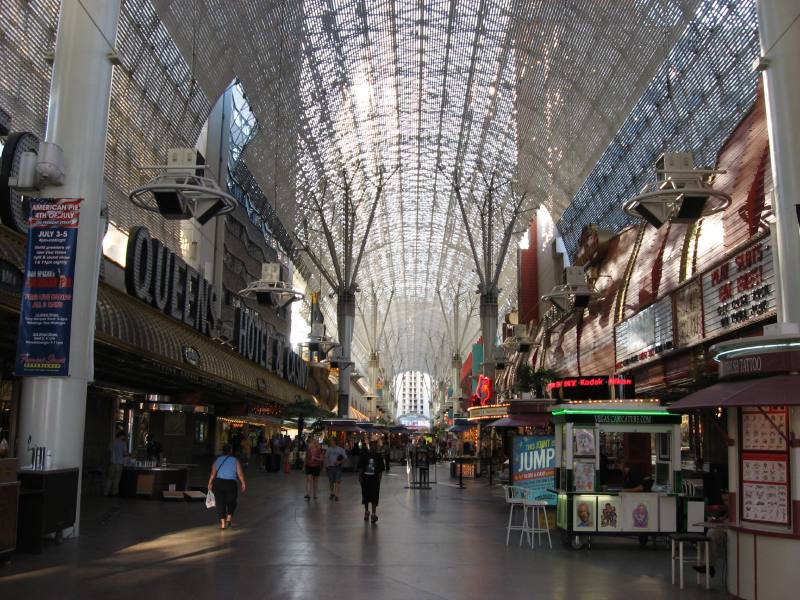
Downtown and locals casinos usually offer the same rules at lower typical minimums. Vegas Advantage counted 3:2 hit-soft-17 shoe games at 7 Downtown casinos with $10 to $50 minimums and 25 locals and off-Strip casinos at $5 to $25, against $5 to $500 at 25 Strip casinos. Most Downtown casinos sit on or near the Fremont Street Experience, so comparing several pits takes only a short walk. Circa, Downtown, deals a six-deck stand-on-all-17 game in its high-limit area with a house edge of about 0.42%.
Blackjack minimums by area (Vegas Advantage surveys, 2026)
| Game type | Las Vegas Strip | Downtown | Locals and off-Strip |
|---|---|---|---|
| 3:2 shoe, dealer hits soft 17 | 25 casinos, $5–$500 | 7 casinos, $10–$50 | 25 casinos, $5–$25 |
| 3:2 six-deck, dealer stands on all 17s (best rules, about 0.28% to 0.42% edge depending on surrender and re-split aces) | 16 casinos, $50–$500 | 1 casino, $25 | 8 casinos, $50–$100 |
| 6:5 six- or eight-deck | 27 casinos, $5–$25 | Not summarized | Not summarized |
| 3:2 double-deck, dealer hits soft 17 | 17 casinos, $15–$200 | Not summarized | Not summarized |
| Electronic 3:2 (live-dealer stadium) | Treasure Island, $3 | Not summarized | Not summarized |
Sources: Vegas Advantage Strip blackjack survey (updated May 18, 2026) and six- and eight-deck survey (updated May 16, 2026), checked October 20, 2026. Ranges are the lowest minimums the surveyors expect to find, often in the mornings and afternoons; expect higher minimums during busy times. "Not summarized" means the free survey pages do not give that figure.
Expected cost per hour at $25 a bet
Formula: expected hourly loss = bet size × decisions per hour × house edge. $25 bets, flat betting, correct strategy.
Show the numbers
| Game and bet | Expected loss per hour |
|---|---|
| Blackjack 3:2 | 8.1 dollars an hour |
| Baccarat banker | 19.1 dollars an hour |
| Craps pass line | 16.9 dollars an hour |
| Roulette single zero | 23.6 dollars an hour |
| Blackjack 6:5 | 31.9 dollars an hour |
| Roulette double zero | 50.0 dollars an hour |
How to read the cost-per-hour chart
Each bar is a long-run average, not a prediction for your night. The math is simple enough to do at the table: multiply your bet by the number of decisions per hour and by the house edge.
Worked example, 3:2 blackjack: $25 × 70 hands × 0.46% = $8.05 an hour. The same table paying 6:5: $25 × 70 × 1.82% = $31.85. Double-zero roulette: $25 × 38 spins × 5.26% = $49.97. Single-zero roulette: $25 × 35 × 2.70% = $23.63. Craps pass line: $25 × 48 × 1.41% = $16.92. Baccarat banker: $25 × 72 × 1.06% = $19.08.
The speed figures come from a player-rating table the Wizard of Odds published in an older Ask the Wizard column, sourced to an anonymous executive at a major Strip casino; they are one casino's assumptions, not a market average. Real speed depends on how many people are at the table: a separate Wizard of Odds table, sourced to Jim Kilby's Casino Operations Management, puts blackjack at 209 hands an hour heads-up and 52 with seven players. A crowded table is slower, and therefore cheaper per hour.
Put the 2025 visitor averages next to it. The LVCVA found visitors who gambled spent 2.6 hours a day doing it. At $25 a hand, 2.6 hours of 3:2 blackjack has an expected cost of about $20.93; the same time at 6:5 is about $82.81, and at double-zero roulette about $129.92. Against the $848.95 average trip gambling budget reported by visitors who gambled, the game and table rules you choose matter more than which casino you are in.
Two cautions. That same rating table assumes a 0.75% blackjack edge rather than 0.46%; the Wizard of Odds explains that rating edges reflect player errors and the average mix of bets. And for craps we use the table's 48 decisions an hour, which it does not tie to a specific bet; adding odds lowers the combined edge, while proposition bets raise it sharply.
The games, and what they cost
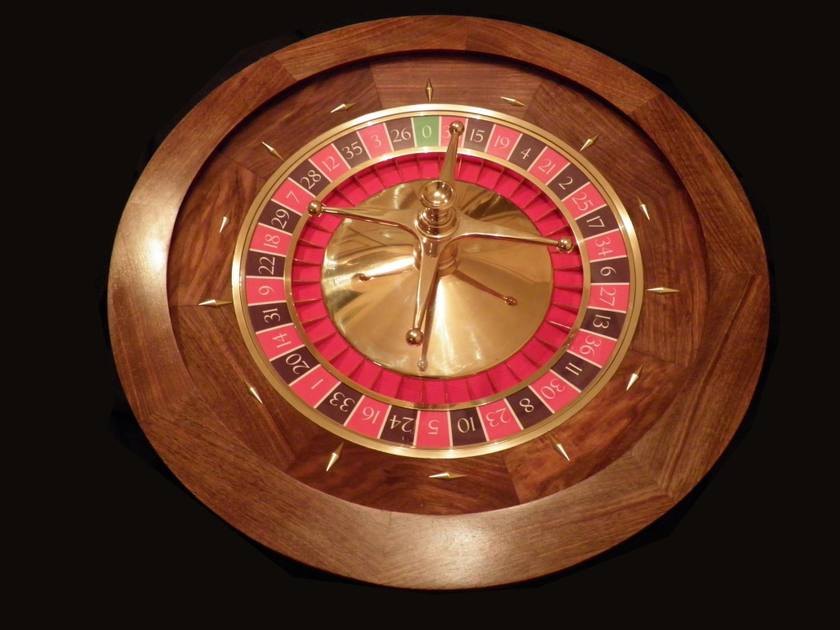
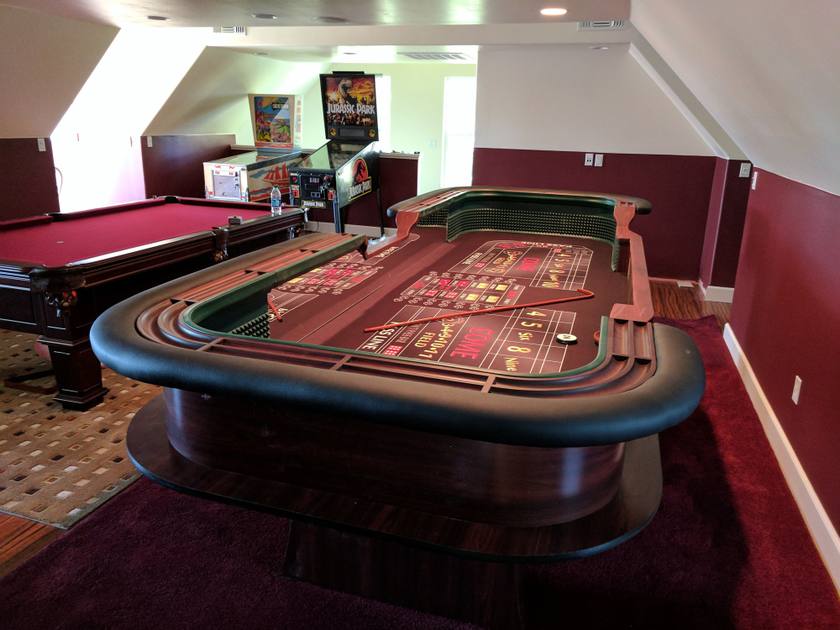
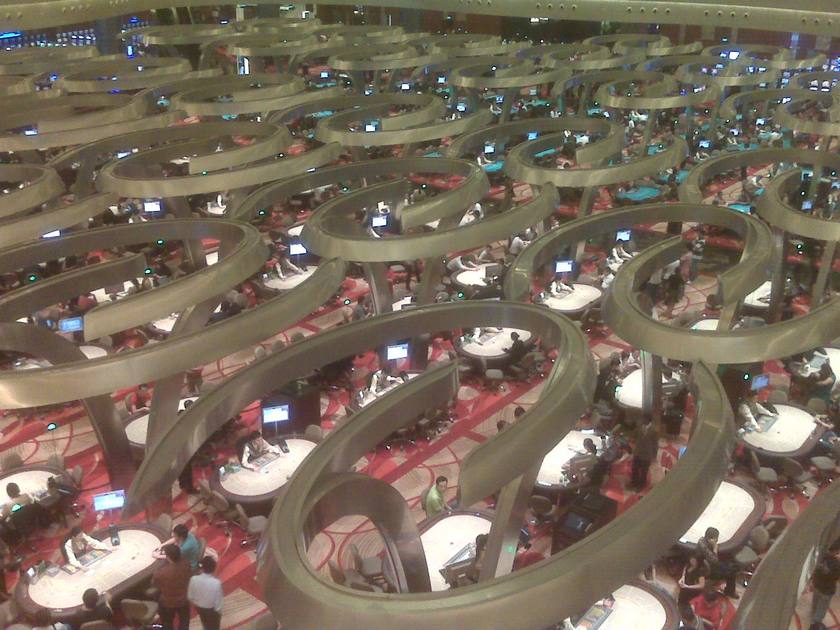
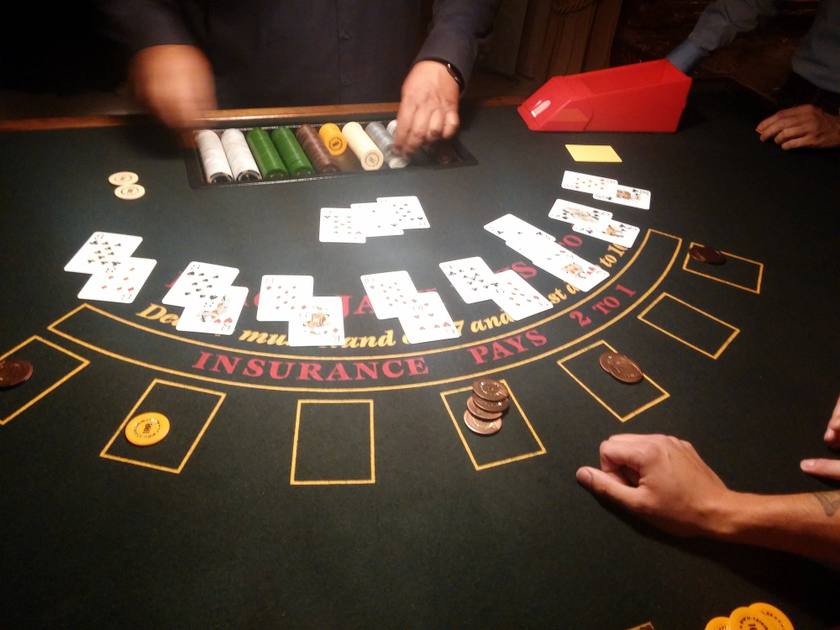
Strip win percent swings month to month
Monthly win percent on the Las Vegas Strip in 2026 for three table games. The house edge never changes; the hold does.
Show the numbers
| Month 2026 | Blackjack | Craps | Roulette |
|---|---|---|---|
| Jan | 10.9% | 17.6% | 18.9% |
| Feb | 13.5% | 18.0% | 18.1% |
| Mar | 12.3% | 13.2% | 18.8% |
| Apr | 9.1% | 17.4% | 19.6% |
| May | 13.3% | 14.0% | 17.4% |
| Jun | 9.6% | 17.5% | 22.0% |
| Jul | 11.8% | 17.3% | 17.3% |
| Aug | 9.3% | 19.9% | 14.5% |
Why the hold swings month to month
In April 2026 Strip blackjack held 9.08%; in February it held 13.53%. Nothing about the rules changed. Short-run luck, the mix of high-limit play and how long players kept re-betting their chips all move the monthly number. Roulette ranged from 14.52% to 21.98% over the same eight months, and craps from 13.22% to 19.91%.
If a market as large as the Strip, with more than a thousand blackjack tables, swings by four percentage points from month to month, a single player's session will swing far more. That is why bankroll size matters as much as edge. A $200 bankroll at a $25 table is eight bets; a normal losing streak can end the session in minutes even at a low-edge game. At a $10 table the same $200 is twenty bets.
Over a full year the monthly swings even out: across the twelve months to August 31, 2026, Strip blackjack held 11.91%, between its worst (9.08%, April) and best (13.53%, February) months of 2026.
How to find a cheaper, better table
Read the felt before the minimum
Look for "Blackjack pays 3 to 2" printed on the layout. A $15 6:5 game costs more per hour than a $25 3:2 game at the same speed.
Play when the minimums drop
The Vegas Advantage ranges are the lowest the surveyors expect to find, often in the mornings and afternoons. Expect higher minimums during busy times, and tables go up as they fill.
Walk next door
Minimums differ between neighboring casinos and even between pits in the same building. Ask the floor supervisor whether a lower-limit or 3:2 table is open.
Look Downtown or off-Strip for 3:2 at low stakes
Downtown 3:2 shoe games start at $10 and locals casinos at $5 in the 2026 survey, while Strip 3:2 games are usually $25 or $50 (occasionally $15).
Consider electronic tables
Treasure Island's live-dealer stadium game pays 3:2 from $3, but check the payout: Vegas Advantage says most Strip casinos' electronic blackjack pays 6:5.
Skip the side bets
Bets such as the baccarat tie (14.36%), craps hardways (9.09% to 11.11%) and Three Card Poker Pairplus (7.28%) cost several times the main bet.
Set a session budget and a time limit before you sit
Use the cost-per-hour math to pick a budget you are comfortable losing, and leave when it is gone.
Places mentioned in this guide
Flagship placesThe STRAT Hotel, Casino & Tower
The STRAT Las Vegas is a 1,149-foot tower and casino hotel at the north end of the Strip, with an observation deck, SkyJump, the Big Shot ride and a revolving restaurant at the top.
Caesars Palace
The Strip's original Roman fantasy, now 60 years old: a huge resort of six towers with the Forum Shops, the Colosseum, Bacchanal Buffet and the Garden of the Gods pools.
Fremont Street Experience
The Fremont Street Experience is downtown Las Vegas's free, open-24-hours pedestrian mall under the Viva Vision LED canopy, with hourly light shows, three stages and SlotZilla.
Responsible play, by the numbers
The math in this guide points to a few habits that make a casino trip cheaper and more fun. Decide in advance what the gambling part of your trip is worth to you, the way you would budget for a show. Pick games with lower edges and slower pace if you want the money to last. Take breaks: the 3D map makes it easy to plan a walk between casinos, and a fountain show costs nothing.
Do not chase losses. Every bet on this page has a negative expected value, so betting more to win back a loss only raises the expected cost. Do not gamble with money set aside for rent, bills or the trip home.
See these casinos on the map
What is the minimum bet for blackjack in Las Vegas?
It varies by casino and time of day. The 2026 Vegas Advantage survey found 3:2 blackjack on the Strip is usually $25 or $50, sometimes $15 at quiet times and $100 when busy. 6:5 games can be $5 to $25. Downtown 3:2 shoe games start around $10 and locals casinos around $5. Always check the sign on the table.
Is 6:5 blackjack worth playing?
Usually not if a 3:2 game is available. Under common Strip rules the house edge rises from 0.46% at 3:2 to 1.82% at 6:5, according to the Wizard of Odds. At $25 a hand and 70 hands an hour, that is about $32 an hour in expected losses instead of about $8.
What is the best bet in a Las Vegas casino?
Among common table bets, the lowest edges are blackjack with good rules (0.28% to 0.46% with 3:2 payouts and basic strategy), the odds bet behind the craps pass line (0%), the pass line itself (1.41%) and baccarat banker (1.06%). Full-pay Jacks or Better video poker is 0.46% with perfect play.
Why do casinos report blackjack wins of 11% or more if the house edge is under 1%?
The Nevada Gaming Control Board's table-game win percent is a hold figure, which the Board says is adjusted for credit play. In standard casino accounting, table hold is casino win divided by the drop, the cash and credit players exchange for chips, not by every bet. Players re-bet the same chips many times, so total wagers are far larger than the buy-in. A small edge on a large volume of bets produces a much larger share of the original buy-in.
Are Downtown Las Vegas casinos cheaper to gamble in?
For table minimums, generally yes: the 2026 Vegas Advantage survey found Downtown 3:2 blackjack at $10 to $50 versus $25 or more at most Strip games. Lower minimums do not guarantee better rules, though. Downtown blackjack actually posted a higher win percent than the Strip over the twelve months to August 2026, 13.97% versus 11.91%.
How old do you have to be to gamble in Las Vegas?
Twenty-one. Nevada law (NRS 463.350) bars anyone under 21 from playing, wagering, collecting winnings or loitering in gaming areas. Casinos check ID, so bring a valid photo ID.
See these places on the map
Sources & checks
- Gaming Revenue Report, August 2026 (twelve months 9/1/2025–8/31/2026), released September 30, 2026
Las Vegas Strip and Downtown win amounts, units and win percent by game for the twelve months to August 31, 2026 (Strip total gaming win $8,985,031 thousand; Strip blackjack 11.91%, craps 16.90%, roulette 17.92%, baccarat 15.80%, Ultimate Texas Hold'em 22.48%, Three Card Poker 31.11%, Let It Ride 28.80%, Pai Gow Poker 21.43%, slots 7.75%; Downtown blackjack 13.97%, craps 13.28%, roulette 18.31%, Ultimate Texas Hold'em 18.56%, Three Card Poker 28.86%, Let It Ride 24.27%, Pai Gow Poker 15.90%, slots 8.36%); Strip table, counter and card game win $3,949,662 thousand (includes sports pool and race book) and slot win $5,035,369 thousand; definition of slot win percent and credit-play adjustment for games.
Checked: 2026-10-20 - Gaming Revenue Information: monthly Gaming Revenue Reports, January–August 2026
Monthly Las Vegas Strip win percent for blackjack, craps and roulette, January to August 2026 (Current Month column).
Checked: 2026-10-20 - House Edge of Casino Games Compared
House edge (optimal or near-optimal play, ties counted) for blackjack (liberal Vegas rules 0.28%), baccarat, craps, roulette, Pai Gow Poker, Ultimate Texas Hold 'Em (ante only), Three Card Poker, Let It Ride, Big Six, keno and full-pay Jacks or Better video poker; Pai Gow Poker assumes house-way play, one-on-one, banking half the time; rating-edge note that comp edges reflect player errors and average bet mix.
Checked: 2026-10-20 - 6 to 5 Blackjack: Why You Shouldn't Play
Under common Strip rules (H17, DAS, surrender, re-split aces) the house edge is 0.46% at 3:2 and 1.82% at 6:5.
Checked: 2026-10-20 - Ask the Wizard #184: Hands per Hour and Average House Edge
Player-rating table attributed to an anonymous executive at a major Strip casino: decisions per hour (blackjack 70, baccarat 72, craps 48, roulette 38, single-zero roulette 35) and a 0.75% blackjack rating edge.
Checked: 2026-10-20 - Ask the Wizard: Table Games FAQ (hands per hour by number of players, from Jim Kilby, Casino Operations Management)
Blackjack hands per hour from 209 with one player to 52 with seven players.
Checked: 2026-10-20 - Las Vegas Strip Blackjack Survey for 2026 (updated May 18, 2026)
Strip 3:2 blackjack minimums usually $25 or $50, as low as $15, up to $100 when busy; lowest minimums often in mornings and afternoons; counts and minimum ranges for double-deck and shoe games on the Strip; The STRAT deals three games, all 3:2, $5 to $25 minimums; most Strip electronic blackjack pays 6:5.
Checked: 2026-10-20 - Las Vegas 2026 Six and Eight-Deck Blackjack Minimum Bets (updated May 16, 2026)
Stand-on-all-17 six-deck games (about 0.28% edge with surrender and re-split aces; Caesars properties about 0.35%) at 16 Strip, 1 Downtown and 8 locals casinos; 3:2 hit-soft-17 shoe games at 25 Strip ($5–$500), 7 Downtown ($10–$50) and 25 locals ($5–$25) casinos; Circa high-limit game about 0.42%; Treasure Island $3 3:2 electronic stadium game.
Checked: 2026-10-20 - Las Vegas Casinos Are Loosening Up Games (January 30, 2026)
$5 6:5 blackjack at Slots A Fun and Excalibur; The STRAT the only Strip casino paying 3:2 on all blackjack (from $10 six-deck, $25 double-deck in January 2026); single-zero roulette seen twice at $15; Caesars Entertainment $25 3:2 shoe games, usually $50 at Caesars Palace, 6:5 usually $15.
Checked: 2026-10-20 - 2025 Las Vegas Visitor Profile Study
81% of visitors gambled in 2025; visitors who gambled averaged 2.6 hours of gambling per day and a personal gambling budget of $848.95 per trip.
Checked: 2026-10-20 - Table Games Revenue Management: A Bayesian Approach (Daryl F. Boykin, 2014 master's thesis)
Table hold is calculated as win divided by drop (citing Lucas & Kilby, 2012).
Checked: 2026-10-20 - How casinos measure house advantage, and what the values mean
At the tables, hold is the fraction of the drop the casino keeps; it is influenced by edge but not analogous to it.
Checked: 2026-10-20 - NRS 463.350: Gaming or employment in gaming prohibited for persons under 21
Persons under 21 may not play, wager, collect winnings or loiter in licensed gaming areas in Nevada.
Checked: 2026-10-20 - Update on Problem Gambling Helpline in Nevada
1-800-GAMBLER remains operational in Nevada, as does 1-800-522-4700.
Checked: 2026-10-20 - Notice to Licensees #2025-83: Addendum to Notice #2025-74 re: Problem Gambling Helpline Number (October 29, 2025)
Either 1-800-522-4700 or 1-800-GAMBLER may be posted as the problem gambling helpline.
Checked: 2026-10-20