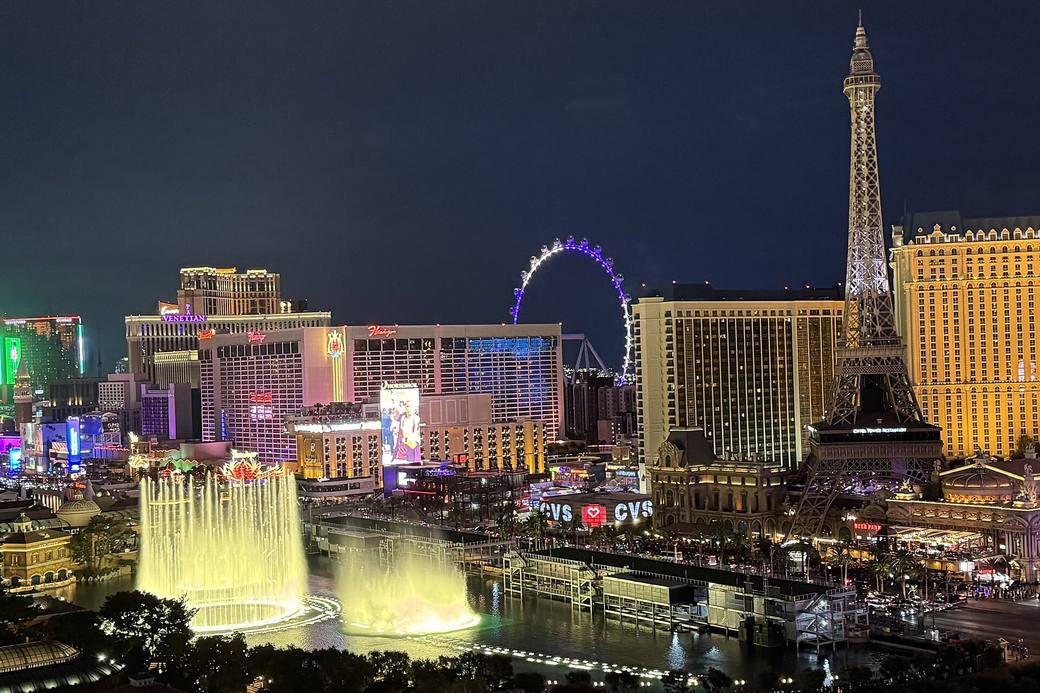
Is Las Vegas dying? If you watched a few videos or read a few headlines over the past year, you could be forgiven for thinking so. Visitor counts fell in every month of 2025, prices became a national talking point, and one headline said tourism had crashed to "early 2000s levels."
The real picture is more mixed, and in some ways more interesting. Fewer people are arriving, but Nevada's casinos took in record money in 2025, conventions are growing, and billions of dollars of new projects are going up. This article goes through the numbers one question at a time, including the parts that are genuinely worrying: shrinking earnings at Caesars and MGM, an oil shock that has pushed up airfares, and softer condo prices. It ends with our forecast for the months ahead. If you are planning where to stay along the Strip, our map of Strip hotels in order is a good place to start.
Why do people say Las Vegas is dying?
Because the 2025 visitor numbers were genuinely bad. Every one of the 12 months in 2025 had fewer visitors than the same month of 2024. Canadian visitors fell 17.4%, from 1,448,700 to 1,196,300, according to LVCVA figures reported by FOX5. Overseas visitors held flat at 2.34 million but remain 23.4% below 2019.
Then came the prices. Casino executives themselves later admitted the backlash had a point. MGM's Bill Hornbuckle said, "We should have been more sensitive to the overall experience at a place like Excalibur to those customers," and added, "You can't have a $29 room and a $12 coffee." Caesars CEO Tom Reeg recalled, "Remember the summer when we talked about a $25 bottle of water?" Both comments came in a KTNV report on the industry's pricing problem. Reeg went on to say that was not what was driving activity.
The headlines followed. The AP ran "Las Vegas tourism is down. Some blame Trump's tariffs and immigration crackdown" in August 2025. Fox News followed in January 2026 with "Las Vegas tourism crashes to early 2000s levels as visitors flee the city." In 2026, Spirit Airlines, once Harry Reid's second-busiest carrier, shut down on May 2, and its Reid passengers had already fallen 72% in the first three months of the year.
The "early 2000s" claim does not hold up well, though. The LVCVA's historic tourism statistics counted 38.5 million visitors in 2025, which is roughly level with 2005 (38.6 million) and higher than any year before 2005. The 2002 total was 35.1 million. A bad year, but not a return to the early 2000s.
Las Vegas scorecard: 2019 vs now
| Measure | 2019 | 2024 | 2025 | Jan to Sep 2026 (vs same months of 2025) |
|---|---|---|---|---|
| Visitors | 42.5 million | 41.7 million | 38.5 million | 28.9 million (down 0.1%) |
| Hotel occupancy | 88.9% | 83.6% | 80.3% | 80.1% |
| Average nightly room rate | $132.62 | $193.16 | $184.43 | $183.06 (up 1.0%) |
| Convention attendance | 6.6 million | 6.0 million | 6.0 million | 5.0 million (up 9.6%) |
| Airport passengers | 51.5 million | 58.4 million | 55.0 million | 38.4 million (down 7.3%) |
| Clark County gaming revenue | $10.4 billion | $13.6 billion | $13.7 billion | $10.3 billion (up 2.0%) |
| Strip gaming revenue | $6.6 billion | $8.8 billion | $8.8 billion | $6.6 billion (up 2.7%) |
The 2025 total of 38.5 million was the lowest since 2021 and about 9% below 2019's 42.5 million. The all-time record is still 2016, at 42.9 million. So the city is below its peak, but not by a cliff-edge margin.
The latest LVCVA figures run through September 2026, and they show a market that has stopped falling. January to September brought 28.9 million visitors, down just 0.1% on the same period of 2025. Five of the nine months were up: February, March, May, July and September.
August deserves a note. The LVCVA explained that "with a less packed event calendar and the absence of Labor Day weekend that largely fell in August last year, the destination hosted approximately 3.0M visitors, -4.3% fewer than last August." That is a calendar effect, not a new collapse.
The caution is that flat is measured against a weak 2025. Compared with January to September 2024 (31.4 million), 2026 is still about 8% behind. Hotel occupancy tells the same story: 83.6% in 2024, 80.3% in 2025 and 80.1% so far in 2026. The gap between weekends and weekdays is wide, with weekend occupancy at 88.9% and midweek at 76.3%.
Visitors by month: 2024, 2025 and 2026
Thousands of visitors each month, January to September. 2025 ran below 2024 in every month; 2026 is tracking close to 2025, a little above it in five of the nine months.
Show the numbers
| Month | 2024 | 2025 | 2026 |
|---|---|---|---|
| Jan | 3384 thousand | 3342 thousand | 3269 thousand |
| Feb | 3374 thousand | 2973 thousand | 3020 thousand |
| Mar | 3672 thousand | 3387 thousand | 3453 thousand |
| Apr | 3514 thousand | 3336 thousand | 3275 thousand |
| May | 3657 thousand | 3419 thousand | 3486 thousand |
| Jun | 3491 thousand | 3095 thousand | 3080 thousand |
| Jul | 3513 thousand | 3089 thousand | 3172 thousand |
| Aug | 3400 thousand | 3172 thousand | 3035 thousand |
| Sep | 3389 thousand | 3091 thousand | 3097 thousand |
Fewer visitors, more money: how does that work?
Here is the part the "dying" videos skip. Clark County gaming revenue was $13.7 billion in 2025, which is 32% more than 2019's $10.4 billion in dollars, and about 5% more after inflation. That happened with about 9% fewer visitors than in 2019. Put another way, the county took in about $244 of gaming revenue per visitor in 2019 and about $355 in 2025.
Statewide, Nevada casinos won $15.8 billion in 2025, per the Nevada Gaming Control Board's December 2025 report. For the 12 months to September 2026 the statewide figure was $16.1 billion, up 2.4%. Strip gaming revenue was $8.8 billion in 2025, flat on 2024, and has risen 2.7% to $6.6 billion for January to September 2026.
Rooms follow a similar pattern. The average daily rate across Las Vegas was $184.43 in 2025, 39% above 2019's $132.62. Consumer prices rose 26% over the same stretch, so room rates climbed roughly 10% faster than prices in general.
Fewer visitors, more gaming money
Each line starts at 100 in 2019. Visitors are still below that level; Clark County gaming revenue is well above it, and stays above it even after inflation.
Show the numbers
| Year | Visitors | Gaming revenue | Gaming revenue after inflation |
|---|---|---|---|
| 2019 | 100 | 100 | 100 |
| 2020 | 44.8 | 63.2 | 62.4 |
| 2021 | 75.8 | 110.5 | 104.2 |
| 2022 | 91.3 | 123.5 | 107.9 |
| 2023 | 96 | 130.2 | 109.3 |
| 2024 | 98 | 131 | 106.8 |
| 2025 | 90.6 | 132.2 | 105 |
Gambling is also only a quarter of the picture. In the Strip's 2024-25 fiscal year, resorts with $1 million or more in gaming revenue took in $21.1 billion, according to the Nevada Gaming Abstract. Rooms brought in 33.5%, gaming 26.1%, food 18.9%, shows, retail and other 13.9%, and beverage 7.5%.
Where Strip resort money comes from
Share of total revenue, July 2024 to June 2025, for the 51 Strip casinos with $1 million or more in gaming revenue. Rooms bring in more than gambling does.
Show the numbers
| Department | Share of revenue |
|---|---|
| Rooms | 33.5% |
| Gaming | 26.1% |
| Food | 18.9% |
| Shows and other | 13.9% |
| Beverage | 7.5% |
Money coming in is not the same as money kept, and that is where the strain shows. The same group of Strip resorts reported net income before federal tax of $154 million, down 81% from the year before, while paying $2.23 billion in interest. Strip gaming is healthy. Strip profit margins are under real pressure, and the big casino companies' own results show the same squeeze.
What do Caesars' and MGM's earnings say?
Caesars Entertainment and MGM Resorts run most of the big resorts on the Strip between them, and every quarter they report what their Las Vegas business earns. The measure they use is EBITDA: earnings before interest, taxes, depreciation and amortization. Think of it as the cash the resorts make from rooms, casinos, restaurants and shows before paying for their debt. Both also leave out the rent they pay on their buildings. MGM calls its version EBITDAR, with the R for rent, and Caesars counts most of the rent it pays its landlords as interest.
Las Vegas earnings at Caesars and MGM
Yearly earnings from each company's Las Vegas resorts before interest, taxes, depreciation, amortization and rent, in billions of dollars. Both peaked in 2023 and have slipped since.
Show the numbers
| Year | Caesars Las Vegas | MGM Las Vegas Strip |
|---|---|---|
| 2021 | 1.6 billion dollars | 1.7 billion dollars |
| 2022 | 2.0 billion dollars | 3.1 billion dollars |
| 2023 | 2.0 billion dollars | 3.2 billion dollars |
| 2024 | 1.9 billion dollars | 3.1 billion dollars |
| 2025 | 1.7 billion dollars | 2.9 billion dollars |
| Last 12 months | 1.6 billion dollars | 2.8 billion dollars |
The pattern is the same at both companies. Las Vegas earnings jumped after the pandemic, peaked in 2023 and have fallen since. Caesars' Las Vegas adjusted EBITDA was $2.02 billion in 2023, $1.91 billion in 2024 and $1.73 billion in 2025, according to its full-year 2025 results. MGM's Strip resorts earned $3.19 billion in 2023, $3.11 billion in 2024 and $2.86 billion in 2025, per MGM's full-year 2025 results.
2026 has not turned it around yet. In the third quarter, Caesars' Las Vegas EBITDA fell 9.5% to $343 million on revenue down 2.3%, per its third-quarter 2026 results. MGM's third-quarter 2026 results show Strip EBITDAR down 12% to $531 million on revenue down 2%, with room rates down 8% to $218 while casino revenue rose 8% to $488 million. Over the first nine months of 2026, Caesars' Las Vegas earnings are down 8% and MGM's Strip is down 5%.
The bigger worry is how much of each dollar they keep. In the third quarter, Caesars turned about 37 cents of every Las Vegas revenue dollar into EBITDA, down from about 40 cents a year earlier. MGM's Strip kept about 27 cents, down from 30. Revenue slipped about 2% at both, but their other costs rose about 2% to 3%, so a small dip in sales turned into a much bigger drop in earnings.
What about Hornbuckle's line that MGM's Strip earnings over the past 12 months have "grown by nearly 70% since calendar year 2019"? The math checks out: about $2.75 billion in the 12 months to September 2026, against $1.64 billion in 2019, per its 2019 results. It needs footnotes, though. MGM bought The Cosmopolitan in May 2022, so today's total includes a big resort it did not run in 2019 (it also sold The Mirage that December). And MGM now rents the buildings of all its US resorts, at about $1.8 billion a year according to its 2025 annual report. EBITDAR is counted before that rent. Hornbuckle also said that "October has rebounded favorably."
The fair reading: the Strip still earns far more than before the pandemic, partly because MGM now runs more of it, but earnings have been shrinking since 2023 and the companies are keeping less of each dollar. That is a profit squeeze, not a collapse.
Are conventions and big events still coming?
Yes, and this is the strongest part of the case against the doom story. Convention attendance was 6.0 million in 2025, flat on 2024 and below 2019's 6.6 million. In 2026 it has turned up: 5.0 million from January to September, a 9.6% rise. March alone drew 712,000 attendees, against 533,900 in March 2025. The CONEXPO-CON/AGG show in March brought more than 140,000 construction professionals from 128 countries.
The Las Vegas Convention Center finished a $600 million renovation of its older halls in January 2026, building on the $1 billion West Hall that opened in 2021. The LVCVA says the campus is on pace to host upwards of 48 tradeshows and 1.23 million tradeshow attendees in 2026.
Formula 1 is staying. The race was extended through at least 2037 in a 10-year extension announced June 5, 2026. Official 2025 attendance over the three days was 300,000, and the race generated $43 million in state and local tax revenue. Race officials put the economic impact of the 2024 race at $934 million, a figure released by the race itself rather than an independent study. Our Las Vegas Grand Prix guide covers the weekend in detail.
Sphere is another draw. The Wizard of Oz at Sphere opened August 28, 2025 and by mid-June 2026 had passed $400 million in ticket sales, with over three million tickets sold. Sphere Entertainment's second-quarter results show Sphere segment revenue of $226.4 million, up 29%.

Is anyone still building in Las Vegas?
Quite a lot of people are. The table below lays out what has opened and what is still on the way.
What has opened and what is coming
| Project | What it is | Status |
|---|---|---|
| Sphere | $2.3 billion entertainment venue; The Wizard of Oz has passed $400 million in ticket sales | Open since September 2023 |
| Fontainebleau Las Vegas | 67-story resort with 3,644 rooms, built for $3.7 billion | Open since December 2023 |
| Durango Casino & Resort | $780 million locals casino from Red Rock Resorts | Open since December 2023 |
| Las Vegas Convention Center | $600 million renovation of the older halls, after the $1 billion West Hall in 2021 | Finished January 2026 |
| Las Vegas Grand Prix | Formula 1 night race on the Strip | Signed through at least 2037 |
| Hard Rock Las Vegas (former Mirage site) | New guitar tower; more than 3,700 hotel rooms when complete | Targeting the fourth quarter of 2027 |
| Athletics ballpark (former Tropicana site) | $2 billion domed stadium for 33,000 fans | On schedule to open before the 2028 season |
| Brightline West | High-speed rail line to Southern California | Waiting on a $6 billion federal loan; the company says 2029 |
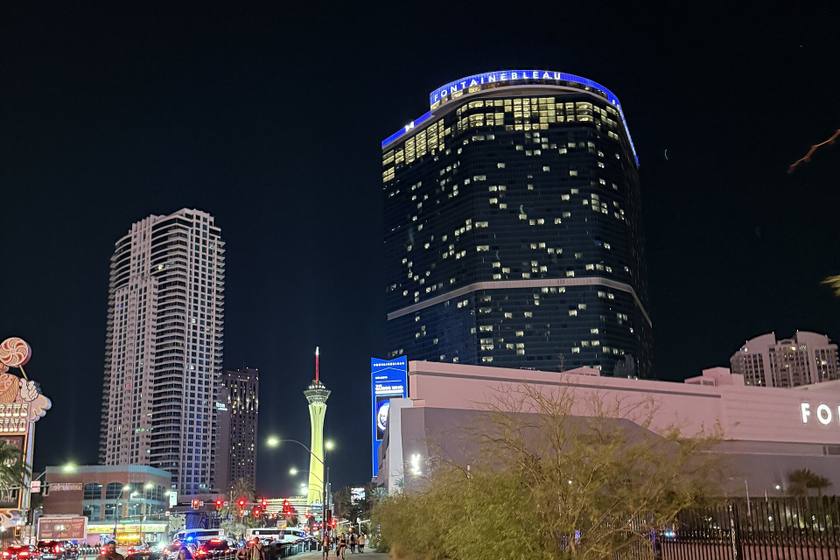
Several big projects are already open. Fontainebleau opened on December 13, 2023 with 3,644 rooms across 67 stories, at a cost of $3.7 billion. Sphere cost an estimated $2.3 billion and opened on September 29, 2023 with U2. Durango, the first new locals casino from Station Casinos' parent Red Rock Resorts since 2008, cost $780 million and opened in December 2023.
More is coming. Hard Rock Las Vegas, on the former Mirage site, held a guitar tower topping-off ceremony in May 2026 and is targeting a fourth-quarter 2027 opening with more than 3,700 hotel rooms. The Athletics' $2 billion, 33,000-seat domed ballpark on the former Tropicana site "remains on schedule to open before the 2028 season" (see our Las Vegas sports guide).
One project is not as settled. Brightline West, the planned high-speed rail line to Southern California, is still waiting on a $6 billion federal loan. The company says it is "still on track to open in 2029" and is "focused on finalizing project financing, which will allow us to move into full-scale construction."
Strip, locals and downtown: who is actually hurting?
It depends where you look. On the Strip, rates are falling (MGM's Strip rate was down 8% last quarter) while the high end does well and value resorts take the hit.
What about the idea that casinos are flying in fewer high rollers on comped private jets? Nobody publishes a count of those flights, but the money says the top end is fine. Strip baccarat, the game of choice for the biggest players, is up 8% over the past year, and MGM's Strip casino revenue rose 8% last quarter even as its room rates fell. The pullback is at the value end, not the top. The risk, covered below, is leaning on the top too much.
Locals markets are healthier. Boulder Strip gaming revenue rose 3.8% to $996 million in 2025 and North Las Vegas rose 4.6% to $298 million. Per the Nevada Independent, "the Las Vegas locals markets combined were up 9.5 percent to $261.1 million" in August 2026. The population is still growing, just more slowly: UNLV's Center for Business and Economic Research now expects Clark County to add about 204,000 residents over the next decade, and has moved the 3 million population mark from 2045 to 2055.
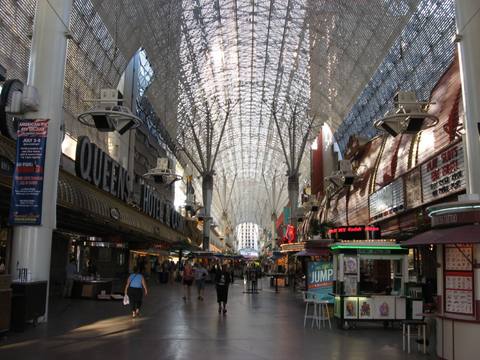
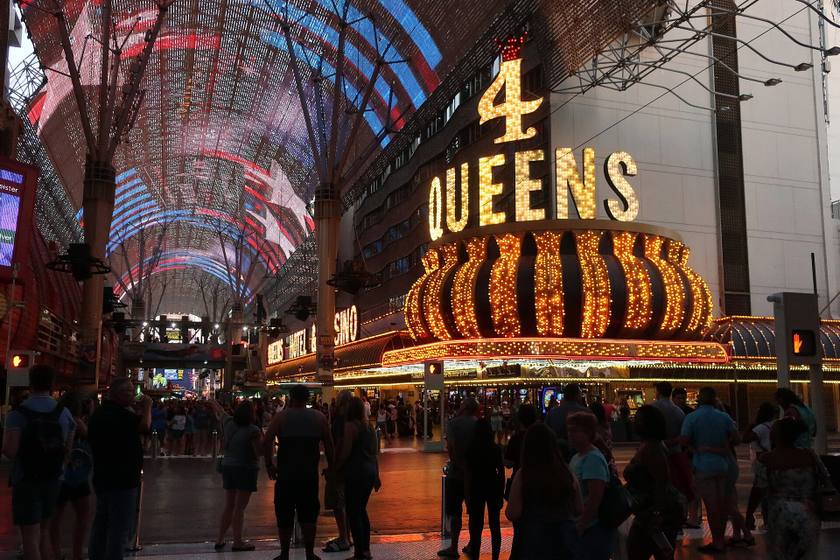
Downtown is more mixed. Gaming revenue was $953 million in 2025, 39% above 2019. But in 2026 downtown hotel occupancy is 63.3%, down 4.5 points, and revenue per available room is down 6.8%. Downtown gaming is down 0.9% for January to September, with September down 7.5%. If you want to see the area for yourself, start with the Fremont Street Experience and our downtown and Fremont Street guide.
The real weak spots
The numbers are not all reassuring. Several of them point to genuine problems that the city will have to deal with.
Fewer people are flying in
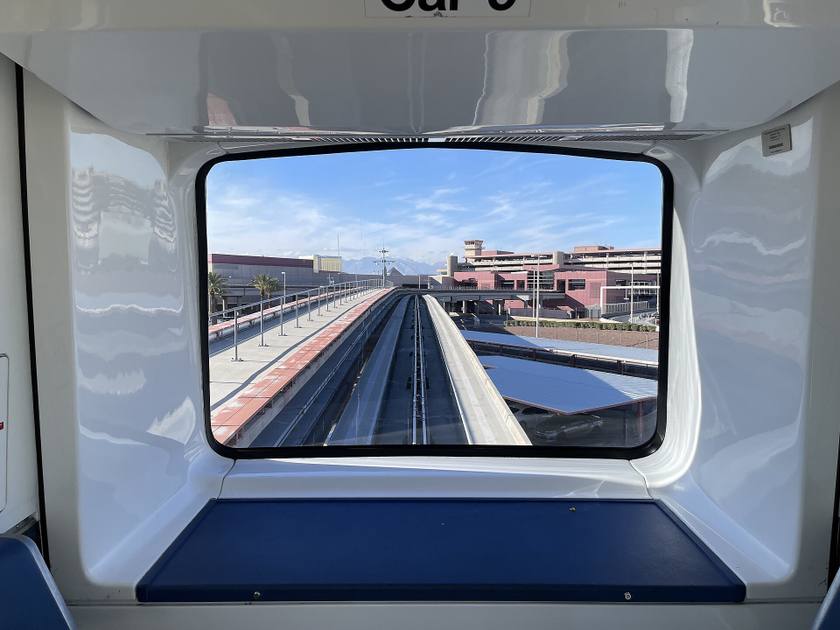
Harry Reid set a record of 58.4 million passengers in 2024, then fell to 55.0 million in 2025, down 5.9%. That is still 7% above 2019. From January to September 2026 the airport handled 38.4 million passengers, down 7.3% from 41.4 million. The Nevada Independent reports that Reid "suffered its 19th straight month of passenger declines in August."
Spirit's shutdown is part of this. The LVCVA also notes that passenger counts include residents and connecting passengers, not just visitors, so the airport total is not a pure visitor count. Road traffic is a partial offset, with I-15 at the California line averaging 45,042 vehicles a day, up 5.8%.
Did higher oil prices make it worse?
Partly. Oil jumped in March 2026 as the war involving Iran disrupted oil shipments from the Middle East. Brent crude averaged $70.89 a barrel in February and $117.29 in April, and the wholesale price of jet fuel rose from $2.33 a gallon in February to $4.40 in September, about double the $2.16 of September 2025, according to the US Energy Information Administration. Airlines passed it on. US airfares were 26.7% higher in May than a year earlier and still 22.4% higher in September, per the Bureau of Labor Statistics.
2026 month by month: fuel, fares and flyers
| Month (2026) | Jet fuel, wholesale price a gallon | US airfares vs a year earlier | Harry Reid passengers vs a year earlier | Cars on I-15 from California vs a year earlier |
|---|---|---|---|---|
| January | $2.10 | +2.2% | -7.6% | -1.0% |
| February | $2.33 | +7.1% | -3.3% | +3.6% |
| March | $3.74 | +14.9% | -4.2% | +5.7% |
| April | $3.96 | +20.7% | -7.2% | +2.9% |
| May | $3.98 | +26.7% | -8.4% | +7.4% |
| June | $3.09 | +26.5% | -9.3% | +5.2% |
| July | $3.45 | +25.5% | -7.6% | Not comparable (2025 road work) |
| August | $3.76 | +23.4% | -9.2% | Not comparable (2025 road work) |
| September | $4.40 | +22.4% | -8.4% | +3.5% |
Some of it lines up. The airport's decline roughly doubled as fares took off, from 3% to 4% in February and March to about 8% to 9% in every month from May. At the same time more people drove: cars crossing from California on I-15 were up 7.4% in May, and total visitors held flat even as flyers fell. That is what you would expect if pricier flights pushed some travelers into the car.
Fuel is not the whole story, though. Passenger counts were already down 7.6% in January, when oil was still cheap, and Spirit's shutdown on May 2 removed a big low-fare airline in the same month fares peaked. The airport says airlines have blamed fuel costs for removing about 60,000 inbound seats through October, which it puts at about 0.15% of its capacity, KLAS reported. So the direct cuts were small. The bigger effect is probably the price of the ticket: higher fares look like one reason the air decline deepened in 2026, alongside Spirit and the cautious value traveler, rather than the cause of the slowdown.
International and Canadian visitors
Total international visitors fell 4.8% in 2025 to 4.73 million. Canada, down 17.4%, is 19.2% below 2019. Overseas visitors are 23.4% below 2019. Mexican visitors edged up 1% to 1.19 million, but Canada and the overseas markets have not come back.
The value traveler pulled back
The LVCVA said that "travel decisions reflected more cautious consumer sentiment, particularly among value-oriented travelers." Reeg put it bluntly: "The leisure customer is not as strong as it has been." Wynn's Craig Billings added that "operating costs in Las Vegas are higher than they used to be."
Hornbuckle said the luxury segment "continues to do exceptionally well," then warned: "We have to be careful that we have to pay attention to that segment, or we're going to lose it." Midweek occupancy of 76.3% shows where the softness sits.
Strip condo prices are slipping, except at the top
Homes show a similar split. Nevada Real Estate Group, a local brokerage, tallied Las Vegas MLS sales in 19 high-rise condo towers, most of them on or near the Strip, and found 334 closings from January 1 to September 18, 2026, down from 341 a year earlier. The median price fell 3.5% to $477,500. Across the whole valley, the median condo or townhome sold for $290,000 in September, down 1.4% from a year earlier, with sales down 12.6% and 7.3% more listings sitting without offers, according to Las Vegas Realtors figures reported by News 3. The association points to rising mortgage rates.
The pattern looks like the hotels. Million-dollar tower sales rose to 66 from 61, and the brokerage says the lower median mostly reflects more sales in cheaper buildings such as Palms Place and The Signature at MGM Grand. The top end is holding up; the middle is where prices are giving.
Too much depends on high rollers
Strip baccarat won $1.53 billion in the 12 months to September 2026, up 8%. That matters because, as the Nevada Independent's Howard Stutz wrote, "Without high-end baccarat play, the Strip's less-than 1 percent revenue increase… would have been an overall loss." Non-baccarat table game revenue was down more than 19 percent. A city that leans on a small group of big spenders is exposed if they stay home.
Profits and jobs
Thin profits, covered above, are one strain. Room tax collections also fell 8.6% in 2025, to $350.8 million. On jobs, Las Vegas metro unemployment was 4.8% in September 2026, down from 5.7% a year earlier, but still above the 4.2% national rate. That national figure is seasonally adjusted and the local one is not, so the comparison is rough.
What does this mean for your trip?
For visitors, a soft market is usually good news. Room rates for the whole of Las Vegas were down 7.4% in August 2026, to $150.32, and down 6.3% in September, to $178.63. MGM's Strip rate fell 8% in the third quarter. Deals work, too: MGM said it sold more than 300,000 room nights during the LVCVA's "Fabulous Five-Day Sale" in fall 2025, nearly double its typical pace.
Midweek is the value play. With weekend occupancy at 88.9% and midweek at 76.3%, there is simply more room midweek. Compare the full nightly price including resort fees rather than the headline rate, since that is what you will actually pay.
Three guides can help you plan. Our best time to visit Las Vegas page covers timing, the Strip restaurant prices guide shows what to expect at the table, and the list of free things to do in Las Vegas helps keep the budget in check.
What happens next? Our short-term forecast
There is no full public forecast for Las Vegas visitors: UNLV's economists sell theirs to sponsors, and the LVCVA does not publish one. So we built our own for the rest of 2026 from the official numbers above, with the assumptions spelled out. We will update it as new months come in.
Some things point to a firmer finish. MGM's Hornbuckle said on the company's third-quarter call that "October is starting off the fourth quarter on the right foot with solid group and convention activity and a busy citywide event calendar," Hotel Dive reported. The Grand Prix runs November 19 to 21, and CES returns January 6 to 9, 2027.
Others point the other way. The EIA's October outlook expects Brent crude to average $105 a barrel from October to December, $14 more than it expected a month earlier, so airfares are unlikely to fall much before winter. Local businesses are wary too. UNLV's Southern Nevada business confidence index fell to 62.7 in the second quarter of 2026, from 94.4, and most of the business leaders surveyed expected lower sales and profits in their industry.
Further out: 2027 and 2028
The EIA expects oil to ease steadily, with Brent averaging about $84 a barrel in 2027 and wholesale jet fuel falling from $4.40 a gallon in September 2026 to about $2.60 by December 2027. If that happens, fares should come down and the air decline should narrow.
Jet fuel: the 2026 spike and the forecast
Average wholesale price of jet fuel in the US, dollars a gallon, by quarter. The forecast line is the US Energy Information Administration's October 2026 outlook.
Show the numbers
| Quarter | Actual | EIA forecast |
|---|---|---|
| Q1 '25 | 2.3 dollars a gallon | No data |
| Q2 '25 | 2.1 dollars a gallon | No data |
| Q3 '25 | 2.2 dollars a gallon | No data |
| Q4 '25 | 2.2 dollars a gallon | No data |
| Q1 '26 | 2.7 dollars a gallon | No data |
| Q2 '26 | 3.7 dollars a gallon | No data |
| Q3 '26 | 3.9 dollars a gallon | 3.9 dollars a gallon |
| Q4 '26 | No data | 3.9 dollars a gallon |
| Q1 '27 | No data | 3.4 dollars a gallon |
| Q2 '27 | No data | 3.0 dollars a gallon |
| Q3 '27 | No data | 2.8 dollars a gallon |
| Q4 '27 | No data | 2.7 dollars a gallon |
The calendar helps. Nevada's state budget forecasters have built in a College Football Playoff title game in early 2027, the men's Final Four in 2028 and a Super Bowl in early 2029, and they say the Hard Rock opening in the second half of 2027 "would help boost" entertainment tax revenue, according to the Governor's Finance Office forecast presented in October 2026. The Athletics' ballpark is due before the 2028 season. The same forecasters only assume "a gradual recovery," though. Nevada's live entertainment tax collected at casinos fell from $127.0 million in the 2024 budget year to $88.9 million in 2026, and they warn that "tourism softness creates downside risk."
Our view: 2026 ends close to where 2025 did, and 2027 brings modest growth if oil eases as the EIA expects, helped by easy comparisons, more conventions and new openings. The main risk is the reverse: oil stays above $100, fares stay high and the value traveler keeps staying home.
The verdict: not dying, re-pricing
The data does not describe a dying city. It describes one that has been re-pricing. Visitor counts are about 9% below 2019, yet gaming revenue is 32% higher, rooms cost 39% more than in 2019, conventions are growing and billions are going into new projects. At the same time, flights are down, international visitors have not returned, value travelers have pulled back, and Las Vegas earnings at Caesars and MGM have been falling since 2023.
The next few months should show whether 2026's flat visitor line is a floor or a pause. Here is what to watch:
Airport passenger counts, after 19 straight months of declines
Oil and airfares, with the EIA expecting Brent near $105 a barrel through December
Caesars' and MGM's Las Vegas earnings for the last three months of 2026
Midweek occupancy, currently 76.3%
Room rates at value resorts
The Hard Rock opening, targeted for the fourth quarter of 2027
The Athletics ballpark, due before the 2028 season
Brightline West's $6 billion loan
Is Las Vegas dying in 2026?
No. Visitors in January to September 2026 were flat at 28.9 million, down 0.1%, after a 7.5% drop in 2025. Convention attendance is up 9.6% and Strip gaming revenue is up 2.7%. The weak spots are real: airport passengers are down 7.3%, and Strip profits and value-resort demand are under pressure.
Why did Las Vegas tourism drop in 2025?
Visitors fell 7.5% to 38.5 million, with every month down. Canadian visitors fell 17.4% and overseas visitors stayed 23.4% below 2019. The LVCVA pointed to cautious consumer sentiment among value-oriented travelers. Pricing complaints, including $25 water and $12 coffee, added to the backlash.
Are Las Vegas visitor numbers recovering?
They have stabilized rather than rebounded. January to September 2026 was flat, with five of nine months up. That is still about 8% below the same period of 2024. Convention attendance is up 9.6%, but airport passengers are down 7.3%, so the recovery is partial and uneven.
Is Las Vegas cheaper to visit now?
Somewhat. Citywide room rates fell 7.4% in August 2026 to $150.32 and 6.3% in September to $178.63, and MGM's Strip rate dropped 8% last quarter. Over the longer run, 2025 rates were still 39% above 2019. Midweek occupancy is 76.3%, versus 88.9% on weekends.
Are Caesars and MGM making less money in Las Vegas?
Yes, though both are still very profitable. Caesars' Las Vegas adjusted EBITDA fell from $2.02 billion in 2023 to $1.73 billion in 2025, and MGM's Strip fell from $3.19 billion to $2.86 billion. In the third quarter of 2026, Caesars was down 9.5% and MGM's Strip 12%, as revenue slipped about 2% while costs kept rising.
What is the forecast for Las Vegas tourism?
Our estimate is about 38.5 million visitors in 2026, level with 2025, with airport passengers down about 7% to roughly 51 million and conventions up to about 6.4 million. For 2027, the EIA expects oil and jet fuel to get cheaper, and new events and openings are lined up, so modest growth looks likely if airfares ease.
What is new or coming to Las Vegas?
Fontainebleau, Sphere and Durango opened in 2023. Hard Rock Las Vegas, on the former Mirage site, targets a fourth-quarter 2027 opening, and the Athletics' $2 billion ballpark is on schedule for before the 2028 season. Brightline West says it is on track for 2029 but still awaits a $6 billion federal loan.
See these places on the map
Sources & checks
- Las Vegas Historic Tourism Statistics 1970-2025
Annual visitors (2025: 38.5 million; 2019: 42.5 million; record 2016: 42.9 million; 2005: 38.6 million; 2002: 35.1 million; 2021: 32.2 million), hotel occupancy, convention attendance, airport passengers, Clark County gaming revenue 2019-2025, room tax collections.
Checked - Executive Summary of Southern Nevada Tourism Indicators (2024, 2025 and 2026 year-to-date files; August 2026 summary)
2025 vs 2024 totals and every month of 2025 down; January to September 2026 visitors 28.9 million (down 0.1%) and monthly changes; occupancy (weekend 88.9%, midweek 76.3%, downtown 63.3%); average daily room rate 2019-2026 including August ($150.32) and September 2026 ($178.63); convention attendance up 9.6%; airport passengers 38.4 million (down 7.3%); I-15 traffic up 5.8%; Strip and downtown gaming revenue; LVCVA note on the August 2026 calendar and on airport counts.
Checked - Las Vegas welcomes 38.5 million visitors in a complex year (January 29, 2026)
Quote on cautious consumer sentiment among value-oriented travelers in 2025; 6.0 million convention attendees in 2025.
Checked - Monthly Revenue Report, December 2025
Nevada casinos won $15.8 billion in 2025, up 1.2%; Strip $8.8 billion; Boulder Strip $996 million (+3.8%); North Las Vegas $298 million (+4.6%); downtown $953 million.
Checked - Monthly Revenue Report, September 2026
Twelve months to September 30, 2026: statewide $16.1 billion (+2.4%); Strip baccarat $1.53 billion (+8%); September 2026 downtown gaming down 7.5%.
Checked - Nevada Casino Revenue Hits Record High in 2025 (January 28, 2026)
2025 statewide gaming win reported as the highest single-year total in Nevada history.
Checked - Nevada Gaming Abstract, fiscal year 2025
Strip resorts with $1 million+ gaming revenue: $21.1 billion total revenue; rooms 33.5%, gaming 26.1%, food 18.9%, other 13.9%, beverage 7.5%; net income before federal tax $154 million (down 81%); interest expense $2.23 billion.
Checked - Consumer Price Index (CPI-U annual averages)
CPI-U annual average 2019 (255.657) and 2025 (321.943): prices up about 26%, used for the inflation-adjusted figures.
Checked - Third quarter 2026 earnings release (October 28, 2026)
Strip net revenue $1.95 billion (down 2%); Strip room rate $218 (down 8%); casino revenue up 8% to $488 million; Strip adjusted EBITDAR $531 million vs $601 million (down 12%), nine months $2.02 billion vs $2.12 billion; Bill Hornbuckle quote on Strip earnings up nearly 70% since 2019 and October rebounding.
Checked - Saved by the high rollers: Strip sees loss of value customers, but lift from premium play
Baccarat quote; non-baccarat table revenue down more than 19%; locals markets up 9.5% to $261.1 million in August 2026; airport's 19th straight monthly decline; quotes from Tom Reeg, Bill Hornbuckle and Craig Billings.
Checked - Report: Canadian visitors to Las Vegas drop 17% in 2025 (May 5, 2026)
Canadian visitors down 17.4% to 1,196,300; 19.2% below 2019; international visitors 4.73 million (down 4.8%); overseas 2.34 million, 23.4% below 2019; Mexico up 1%.
Checked - We lost control of the narrative: Las Vegas casino executives address prices
Hornbuckle quotes on Excalibur and the $29 room and $12 coffee; Reeg quote on the $25 bottle of water; MGM sold more than 300,000 room nights in the Fabulous Five-Day Sale.
Checked - Las Vegas tourism is down (August 19, 2025)
AP headline from August 2025.
Checked - Las Vegas tourism crashes to early 2000s levels (January 14, 2026)
Fox News headline from January 2026.
Checked - Spirit Airlines, once Reid airport's second-largest carrier, ends operations (May 2, 2026)
Spirit shut down on May 2, 2026; its Reid passengers were down 72% in the first three months of 2026.
Checked - CONEXPO-CON/AGG 2026 (March 9, 2026)
More than 140,000 attendees from 128 countries.
Checked - Las Vegas Convention Center completes $600 million renovation (January 5, 2026)
$600 million renovation finished; $1 billion West Hall opened in 2021; on pace for upwards of 48 tradeshows and 1.23 million tradeshow attendees in 2026.
Checked - F1 to race in Las Vegas until at least 2037 (June 5, 2026)
10-year extension through at least 2037; 2025 attendance 300,000; $43 million in state and local tax revenue.
Checked - F1 Las Vegas Grand Prix generated $934 million for Nevada (March 6, 2025)
Race officials' figure of $934 million economic impact for the 2024 race.
Checked - Second quarter 2026 results (July 30, 2026)
Sphere segment revenue $226.4 million, up 29%; The Wizard of Oz at Sphere passed $400 million in ticket sales with over three million tickets sold.
Checked - Sphere costs pushed to $2.3 billion (2023)
Sphere construction cost estimate about $2.3 billion; opened September 29, 2023 with U2.
Checked - 18 years later, Fontainebleau opens on the Las Vegas Strip (December 13, 2023)
Opened December 13, 2023; 3,644 rooms; 67 stories; $3.7 billion.
Checked - Durango casino heralds a new Red Rock Resorts growth spurt
$780 million Durango Casino & Resort, opened December 2023; Red Rock Resorts' first new locals casino since 2008.
Checked - Hard Rock Las Vegas guitar tower topping-off (May 2026)
Guitar tower topping-off ceremony in May 2026; more than 3,700 hotel rooms when complete.
Checked - Hard Rock Las Vegas taking shape ahead of 2027 opening (January 7, 2026)
Targeted fourth-quarter 2027 opening.
Checked - $2B Las Vegas stadium remains on schedule (May 22, 2026)
$2 billion domed ballpark, 33,000 capacity, on schedule to open before the 2028 season.
Checked - Brightline West still waiting on federal funding (October 27, 2026)
Waiting on a $6 billion federal loan; company quotes on 2029 opening and project financing.
Checked - Nevada's unemployment rate drops in September (October 21, 2026)
Las Vegas metro unemployment 4.8% in September 2026 (not seasonally adjusted), down from 5.7% a year earlier.
Checked - The Employment Situation, September 2026
US unemployment rate 4.2% in September 2026 (seasonally adjusted).
Checked - Clark County's 3 million population milestone pushed back a decade (July 22, 2026)
About 204,000 more residents over the next decade; 3 million mark moved from 2045 to 2055.
Checked - Fourth quarter and full year 2025 results (February 17, 2026)
Las Vegas segment adjusted EBITDA $1,728 million in 2025 vs $1,907 million in 2024; Las Vegas net revenue $4,049 million in 2025 vs $4,274 million.
Checked - Third quarter 2026 results (October 27, 2026)
Las Vegas net revenue $930 million vs $952 million (down 2.3%); Las Vegas adjusted EBITDA $343 million vs $379 million (down 9.5%); nine months $1,179 million vs $1,281 million (down 8.0%).
Checked - Fourth quarter and full year 2023 results (February 20, 2024)
Las Vegas segment adjusted EBITDA $2,016 million in 2023.
Checked - Fourth quarter and full year 2022 results (February 21, 2023)
Las Vegas segment adjusted EBITDA $1,964 million in 2022 and $1,568 million in 2021.
Checked - Annual report on Form 10-K for 2025
Adjusted EBITDA excludes the expense of leases accounted for as financing obligations (VICI and GLPI), which is recorded as interest expense.
Checked - Fourth quarter and full year 2025 results (February 2026)
Las Vegas Strip Resorts net revenue $8,442 million in 2025 vs $8,816 million; Strip adjusted EBITDAR $2,858 million in 2025 vs $3,107 million in 2024.
Checked - Fourth quarter and full year 2023 results (February 13, 2024)
Las Vegas Strip Resorts adjusted EBITDAR $3,190 million in 2023 (record) and $3,142 million in 2022.
Checked - Fourth quarter and full year 2022 results (February 8, 2023)
Strip adjusted EBITDAR $1,738 million in 2021; The Cosmopolitan acquired in May 2022; The Mirage sold in December 2022.
Checked - Fourth quarter and full year 2019 results (February 12, 2020)
Las Vegas Strip Resorts adjusted property EBITDAR $1,643 million in 2019.
Checked - Annual report on Form 10-K for 2025
MGM leases the real estate of its US properties under triple net leases, with annual rent payments of $1.8 billion in aggregate.
Checked - Short-Term Energy Outlook, October 2026 (released October 6, 2026; data tables)
Brent crude $70.89 a barrel in February 2026, $103.13 in March, $117.29 in April; wholesale jet fuel $2.33 a gallon in February 2026, $4.40 in September, $2.16 in September 2025; Brent forecast $105 for October to December 2026 ($14 higher than the prior outlook) and about $84 average in 2027; jet fuel forecast about $2.62 in December 2027.
Checked - Consumer Price Index: airline fares, US city average (not seasonally adjusted)
Airline fares vs a year earlier, 2026: January +2.2%, February +7.1%, March +14.9%, April +20.7%, May +26.7%, June +26.5%, July +25.5%, August +23.4%, September +22.4%.
Checked - How higher fuel costs are impacting airlines serving Las Vegas (April 25, 2026)
High jet fuel costs tied to the ongoing war in Iran led to at least one Las Vegas route suspension.
Checked - Rising fuel costs slash thousands of Las Vegas inbound seats
Airport spokesperson: airlines attributed removal of about 60,000 inbound seats through October to rising fuel costs, roughly 0.15% of inbound and outbound capacity.
Checked - Las Vegas high-rise condo market 2026 (September 19, 2026, updated October 26, 2026)
19 condo towers, January 1 to September 18: 334 closings vs 341; median $477,500 vs $495,000 (down 3.5%); $1 million+ sales 66 vs 61; brokerage attributes the lower median to sales mix (Palms Place, The Signature).
Checked - Fewer homes sell around Las Vegas in September amid rising interest rates (October 6, 2026)
September 2026 condo and townhome median $290,000, down 1.4% from a year earlier; condo and townhome sales down 12.6%; 2,796 listed without offers, up 7.3%; rising mortgage rates.
Checked - MGM Resorts shares Q3 2026 earnings (October 29, 2026)
Hornbuckle on the third-quarter call: October starting the fourth quarter on the right foot with solid group and convention activity and a busy citywide event calendar.
Checked - Southern Nevada Business Confidence Index, 2026 Q2
Index fell to 62.7 in 2026 Q2 from 94.4; 57.6% expected lower sales and 60.6% lower profits in their industry.
Checked - Fiscal Years 2027-2029 revenue forecast, Economic Forum (October 14, 2026)
Gradual recovery assumed; live entertainment tax (gaming) $127.00 million in FY2024 and $88.93 million in FY2026; event allowances for the College Football Playoff championship (FY2027), men's Final Four (FY2028) and Super Bowl (FY2029); Hard Rock opening in the second half of 2027; tourism softness creates downside risk.
Checked - Harry Reid airport passenger traffic down 6.7% at mid-year (July 30, 2026)
Airport still expected to surpass 50 million passengers by the end of 2026.
Checked - CES 2027
CES 2027 runs January 6 to 9, 2027, in Las Vegas.
Checked